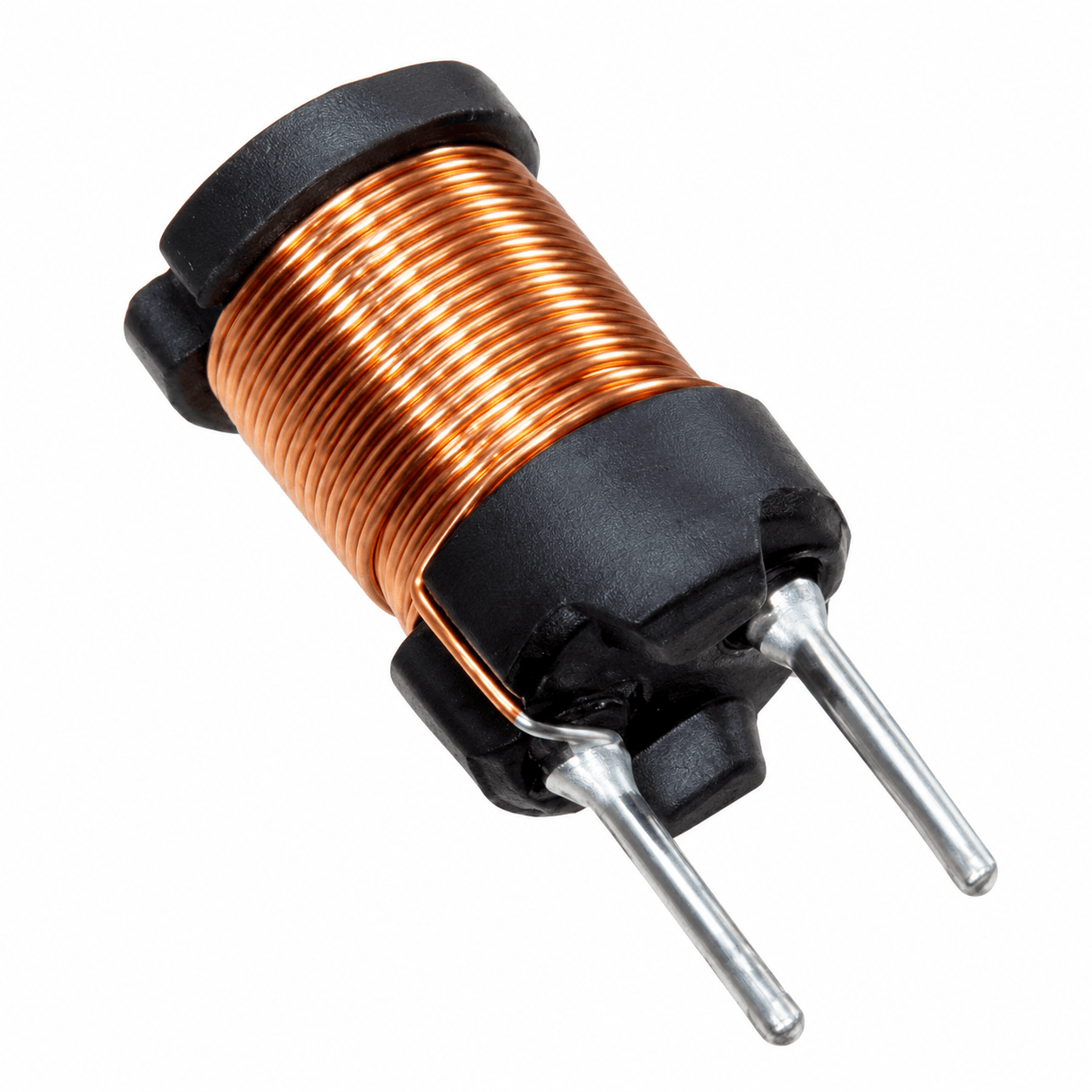

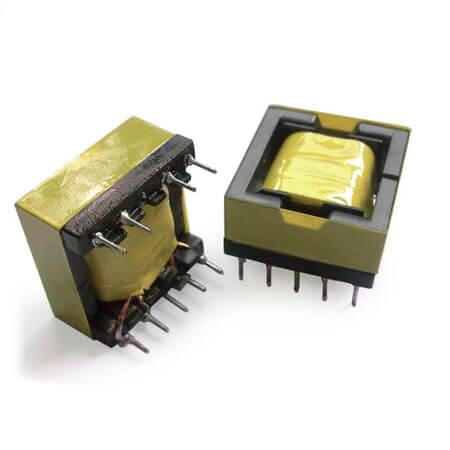
Choosing between ferrite core shapes is one of the first decisions in any transformer or inductor design, and it influences almost everything that follows: winding area, leakage inductance, thermal behaviour, creepage distances, height on the board and the cost of winding. The ferrite material sets the loss and saturation characteristics, but the geometry decides how easily copper can be fitted around it and how the finished part is cooled and mounted.
This guide compares the shapes most often used in switch-mode power conversion: EE, EF, ETD, EER, PQ, RM, UU and the toroid. It is written by NG Electronics, an ISO 9001:2015 certified manufacturer in Pune, India, which winds ferrite core transformers on all of these shapes. The aim is to help engineers and buyers shortlist a geometry before requesting samples.
Key takeaways
- Core geometry sets winding area, leakage, shielding, cooling and cost; the ferrite grade sets loss and saturation.
- EE and EF cores are economical and versatile; ETD and EER add a round centre leg for better copper use.
- PQ and RM cores give more power per board area and better shielding at a higher core price.
- UU cores and toroids suit common mode chokes, high-isolation windings and drive transformers.
Why core geometry matters in a ferrite transformer
Every ferrite core is described by a small set of effective parameters: the effective cross-sectional area that carries flux, the magnetic path length, the effective volume and the window area available for copper. The cross-sectional area determines how many turns are needed to keep flux density within limits for a given voltage and frequency, while the window decides whether those turns, plus insulation, will physically fit. The product of the two areas is typically used as a first indicator of power handling.
Geometry also shapes secondary characteristics that often decide a project. A round centre leg gives a shorter mean turn length than a rectangular leg of equal area, which lowers copper resistance. A wide, shallow window keeps the number of layers small and helps to control leakage inductance between windings. The amount of ferrite surrounding the coil affects stray field and shielding, and the exposed coil surface affects cooling.
E-family ferrite core shapes: EE, EF, ETD and EER
The EE core, and the closely related EF series, is the workhorse of low and medium power conversion. Two E-shaped halves meet around a bobbin, with a rectangular centre leg that is easy to grind for an air gap. Bobbins come in horizontal and vertical styles with many pin layouts, tooling is widespread and winding is straightforward, so cost is low. The open construction cools well but offers little magnetic shielding. These shapes are a common choice for the auxiliary supplies and adaptors served by a flyback transformer manufacturer.
ETD and EER cores keep the E outline but use a round centre leg. ETD cores were developed for economical transformer design, with a window proportioned for efficient use of copper and clip mounting for fast assembly. EER cores typically offer a long winding window, which helps with multi-output windings and with the margins required for safety insulation. Both suit forward, half-bridge and higher power flyback designs, the type of work described on our SMPS transformer manufacturing page.
PQ and RM cores: more power in less board area
PQ cores were designed specifically for switch-mode power supplies. A round centre leg is combined with a large core cross-section relative to the footprint, so a given power level typically needs fewer turns and less board area than an E core of similar volume. The outer legs wrap partly around the coil, improving shielding. The trade-offs are a higher core price, a more enclosed coil that sheds heat less freely, and a narrower slot for bringing out heavy leads.
RM cores have a square footprint intended for dense packing on a printed circuit board. They offer good shielding, clip assembly and well-controlled inductance, often with a gapped centre pole. In power conversion they suit compact, low-profile converters and signal or drive transformers. Window area is modest, so meeting reinforced insulation requirements needs care. NG Electronics uses both shapes for high-frequency ferrite transformers where space is limited.
UU cores and toroids
A UU core forms a rectangular frame from two U-shaped halves, with windings placed on one or both legs. The window is large and the two windings can be separated physically, which gives generous creepage distance and deliberately high leakage inductance. That makes the shape useful for high-voltage transformers and for compact common mode chokes, where the leakage between the two sections provides some differential-mode filtering in addition to the common-mode impedance.
The toroid is a closed ring with no joint, so there is no residual air gap, the full permeability of the ferrite is available and stray field is low. These properties suit common mode chokes, gate-drive and pulse transformers and current sensing. The drawbacks are practical: winding requires toroidal machines or hand work, there is no bobbin to define pin positions and insulation barriers, and a ferrite ring cannot easily be gapped, so it is rarely chosen for flyback energy storage.
How to shortlist a shape for your design
Start from the topology and power level, then let the mechanical and safety constraints narrow the field. Core shape interacts with switching frequency and winding design, so any shortlist should be checked against the loss budget described in our article on high-frequency transformer losses before a bobbin is ordered. As a rule of thumb, the pairings below are typically a sensible starting point for a first prototype.
NG Electronics winds, tapes, varnishes and tests transformers on EE, EF, ETD, EER, UU, RM, PQ and toroidal ferrite cores in-house, from under 1 VA up to several hundred watts. If the shape is still open, share the electrical requirement and the mechanical envelope; our guide on how to specify a custom ferrite transformer lists the details that matter. A technical quotation is returned within 24 working hours, and overseas enquiries are welcome.
- EE or EF: cost-sensitive flyback and forward transformers, gapped inductors, wide bobbin choice.
- ETD or EER: medium to higher power offline converters, multi-output windings, safety margins.
- PQ: the most power for the board area, where some extra core cost is acceptable.
- RM: compact, shielded, low-profile parts and drive transformers.
- UU: common mode chokes and high-voltage or high-isolation windings.
- Toroid: common mode chokes, gate-drive, pulse and sensing transformers with low stray field.
Frequently asked questions
Which ferrite core shape is best for a flyback transformer?
There is no single best shape. EE and EF cores are typically chosen for low-power, cost-sensitive flyback designs because bobbins are widely available and the centre leg is easy to gap. ETD, EER and PQ cores are preferred as power rises or when a round centre leg and better copper utilisation are needed. The final choice depends on power, frequency, height and insulation requirements.
Why are toroids rarely used for flyback transformers?
A flyback transformer stores energy, which in ferrite requires an air gap. A ferrite toroid is a closed ring that cannot easily be gapped, so it saturates at a low direct current. Toroids are better suited to common mode chokes and drive or pulse transformers, where no energy storage is needed and the low stray field of a closed core is an advantage.
Does core shape affect EMI?
Yes. Shapes that surround the coil with ferrite, such as PQ and RM, and closed toroids, radiate less stray field than open E cores. An air gap in the centre leg rather than in the outer legs also keeps fringing flux inside the winding.
About NG Electronics
NG Electronics is a leading ISO 9001:2015 certified manufacturer of toroidal power inductors, common mode chokes, ferrite core transformers, line filter inductors, drum core inductors and custom wound magnetic components, based in Pune, India. Every part is wound and 100% electrically tested in-house. Send your electrical specification and mechanical limits to NG Electronics at sales@ngelectronics.in for a technical quotation and a sample on the core shape that suits your design.