
New power supply design
A design team has a controller and a target output but no magnetics yet. They share the converter requirements, and the transformer is designed around them.
Enquire now


NG Electronics · ISO 9001:2015 Certified Company
A clear specification is the fastest route to a working sample. NG Electronics, an ISO 9001:2015 certified manufacturer in Pune, explains which transformer design inputs matter and why.
Engineers often ask how to specify a custom ferrite transformer when the converter is still on the bench and half the numbers are provisional. The short answer is that the winder needs to know what the transformer must do electrically, what it must withstand, and where it must fit. Everything else, including core size, wire gauge and turns, can be worked out from those three groups of information.
A transformer is sized at the edges of its operating range, not at the middle. Peak primary current and peak flux normally occur at minimum input voltage and full load, while insulation stress is highest at maximum input. A custom ferrite transformer specification that gives only nominal values forces the designer to assume margins, and those assumptions are where sample rounds get lost. Stating minimum, nominal and maximum for the input removes most of that risk.
It also helps to say which values are fixed and which are open. If the controller datasheet dictates a primary inductance and a turns ratio, give them with tolerances. If you only know the outputs and the frequency, say so, and the magnetics can be designed from the converter requirements. NG Electronics works from either starting point and returns a technical quotation, usually within 24 working hours, naming the core, bobbin and construction proposed.
 ISO 9001:2015 certified
Each row is a line your SMPS transformer specification sheet should carry, and why.
| Input voltage range | Minimum, nominal and maximum; AC mains, DC bus or battery. Sets primary turns and peak flux. |
|---|---|
| Outputs | Voltage, continuous and peak current for each winding, including bias or auxiliary windings. |
| Topology and controller | Flyback, forward, push-pull or bridge, plus the controller IC if chosen. Decides gapping and winding arrangement. |
| Switching frequency | In kHz, with the range if it varies with load. Drives core loss and wire selection. |
| Primary inductance | In µH or mH with tolerance where the design fixes it; otherwise leave it to the transformer designer. |
| Leakage inductance | A maximum limit if the snubber or clamp depends on it; measured with the secondary shorted. |
| Isolation | Hipot test voltage between windings and any creepage or clearance your safety standard calls for. |
| Thermal conditions | Ambient temperature in °C, enclosure type and airflow. Decides how much loss is allowed. |
| Mechanical limits | Maximum height, footprint, pin-out and mounting style; a PCB drawing is ideal. |
NG Electronics builds ferrite transformers from under 1 VA up to several hundred watts on EE, EF, ETD, EER, UU, RM, PQ and toroidal cores.
Four common situations in which buyers send us their requirements.
A design team has a controller and a target output but no magnetics yet. They share the converter requirements, and the transformer is designed around them.
Enquire now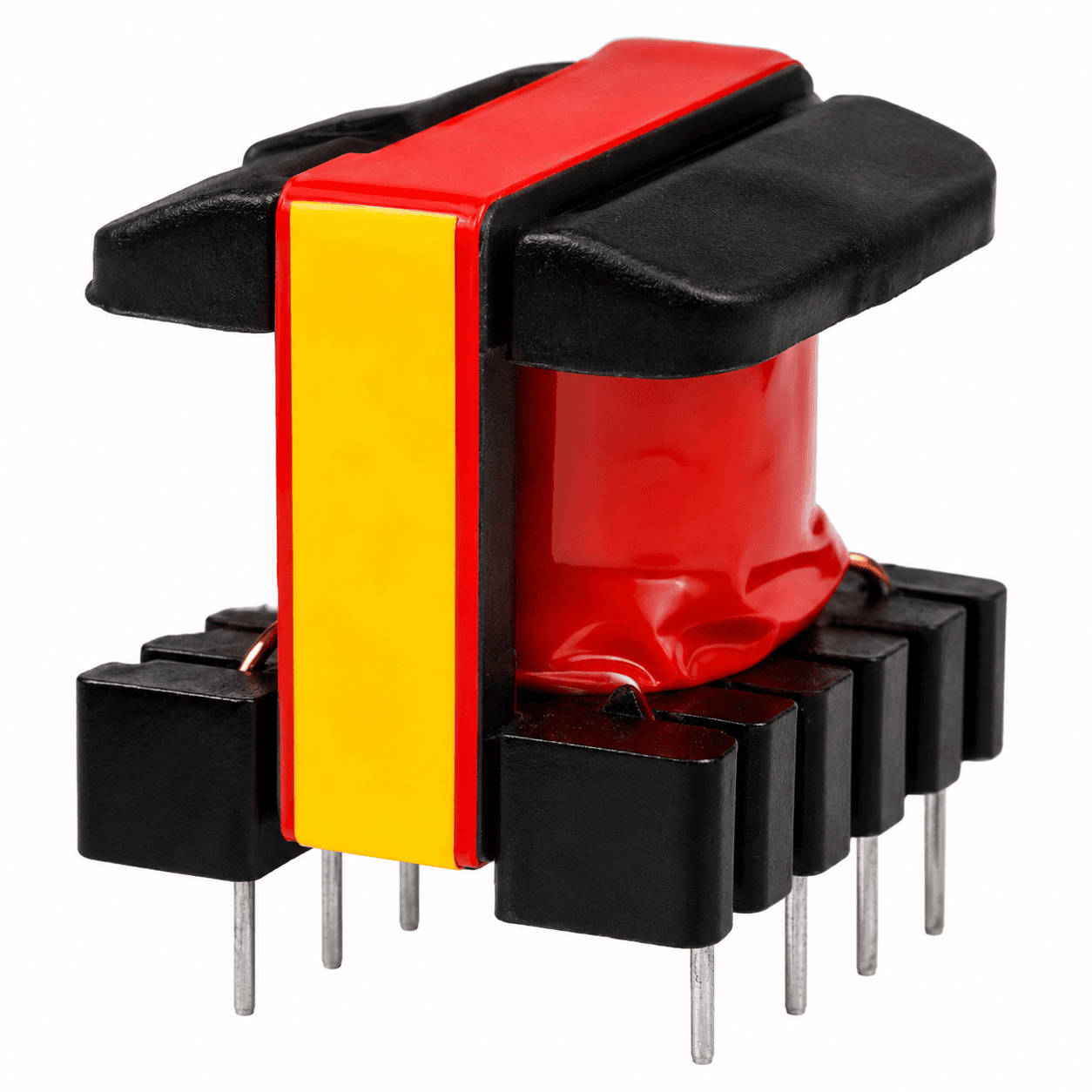
The original transformer is no longer available. A sample, its measured inductance and turns ratio, and the PCB footprint are usually enough to build a pin-compatible replacement.
Enquire now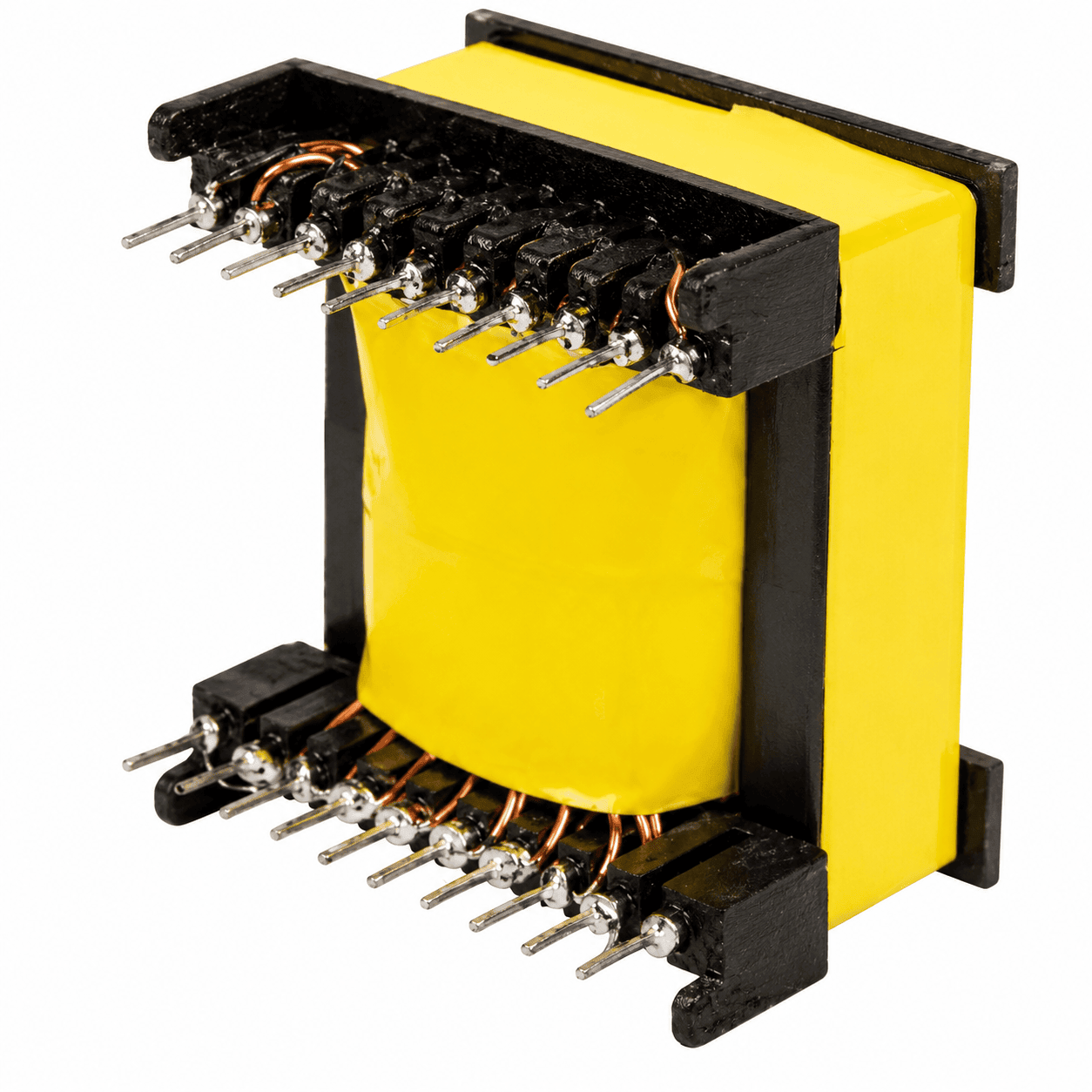
A purchase manager needs an alternative supplier for a running product. The existing drawing becomes the specification, and the sample is compared with the incumbent part.
Enquire now
Solar inverters, UPS systems and EV chargers carry small isolated converters for gate drivers and control logic. These need multi-output transformers with defined isolation between windings.
Enquire nowStock parts you can order today. View details, add to cart or enquire for a custom variant.
Email your sheet, drawing or reference design to sales@ngelectronics.in, or call or WhatsApp +91 83290 52861, Monday to Saturday, 9am to 7pm. Mark unknown values as open and we will propose them in the technical quotation.
Electrical requirements come first because they set the energy the core must handle. Insulation comes next because tape, margins and wire type consume winding space and so influence core choice. Mechanical limits come last, yet they frequently overrule everything else, since a transformer that does not fit the enclosure is of no use however efficient it is.
Do not wait for a perfect document. A one-page sheet with honest gaps is more useful than a detailed sheet built on guesses, because the open points can be discussed before copper is wound. If the same transformer will serve several product variants, list the variants; designing for the widest case at the start is cheaper than changing a bobbin and pin-out after the board layout is frozen.
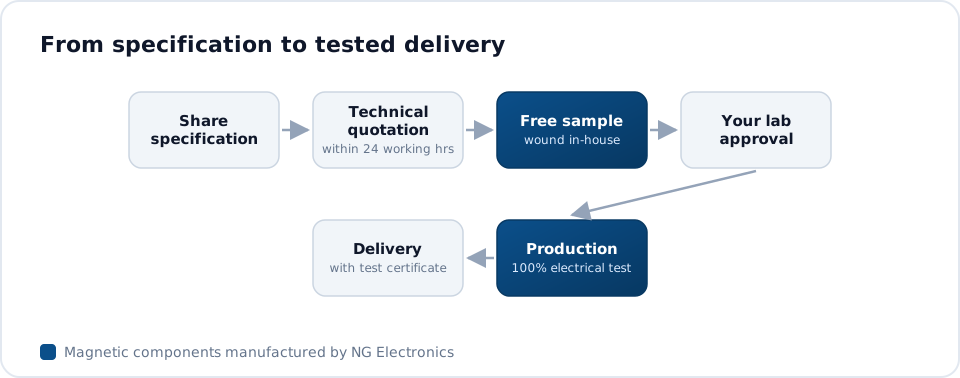


NG Electronics is an ISO 9001:2015 certified manufacturer based at Chimbli, Pune, founded in 2017 by Nishant Gaikwad and now a team of more than 50. Ferrite transformers are wound, taped, varnished and tested on our own floor, so questions raised by your specification are settled with the people who will build the part, not an outside winder.
Design support is free against firm production intent. Custom samples are typically ready within 7 to 10 working days, single-piece prototypes are possible, and around 10 pieces is a normal quantity for R&D. Production lots for custom parts typically start between 100 and 1,000 pieces. Batch records trace each lot to its raw material and production date, and a test certificate is supplied with orders on request. Overseas enquiries are welcome.
Call, WhatsApp or use the form with inductance, current and quantity.
Price, lead time and datasheet within 24 working hours.
Sample built in-house for your lab testing and approval.
Production with 100% electrical testing under ISO 9001:2015.
Packed with a test certificate, shipped across India or exported worldwide.
Answers about how to specify a custom ferrite transformer from NG Electronics, an ISO 9001:2015 certified company
Input voltage range, each output voltage and current, switching frequency, topology and the isolation test voltage are the essentials. With those five items a designer can choose a core and propose turns. Anything else, such as primary inductance or a leakage limit, can be marked open and proposed in the quotation.
Only if you have a reason, such as an existing footprint or a qualified reference design. Otherwise it is better to specify what the transformer must do and let the manufacturer select the core, bobbin and wire. That leaves room to balance core loss against copper loss and to use parts that are readily available.
For a flyback, yes, because the transformer stores energy and the primary inductance sets the peak current and operating mode; give the value and a tolerance. For forward, push-pull and bridge converters the magnetising inductance is not an energy-storage element, so a minimum value is normally enough and the turns ratio matters more.
State the hipot test voltage between each pair of windings that must be isolated and say what grade of insulation the end product needs under your safety standard. If that standard sets creepage and clearance distances, list them. The insulation build is then designed in from the start.
NG Electronics normally replies with a technical quotation within 24 working hours of receiving a usable specification. Custom samples typically follow within 7 to 10 working days and are supplied free for approval in your lab. Production units are all electrically tested.
Yes. An existing transformer can be measured for inductance, turns ratio and winding resistance. It still helps to know the input range, the switching frequency and the isolation voltage of the circuit, because measurements alone do not reveal how hard the part is being driven or what insulation the original used.
SMPS transformer manufacturer in Pune, ISO 9001:2015 certified
Learn moreFlyback vs forward transformer compared: energy storage, core gap, power level and cost
Learn more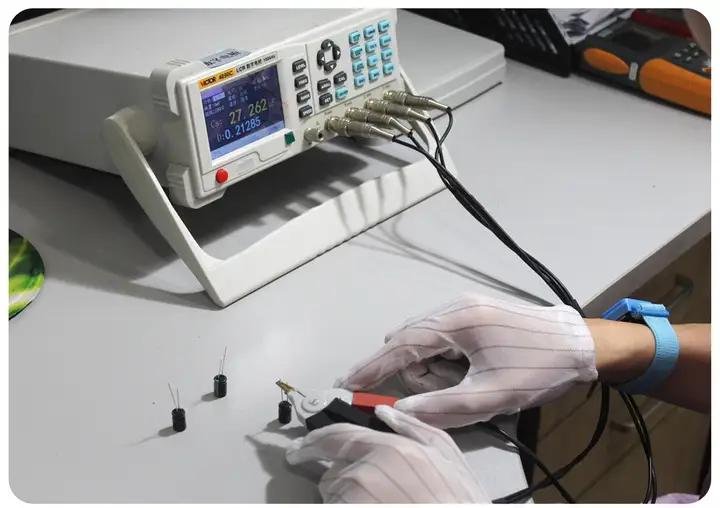
Transformer testing and design validation explained: inductance, leakage, turns ratio and hipot
Learn moreSMPS, flyback and custom high frequency transformers.
Learn moreSend your specification or drawing for how to specify a custom ferrite transformer. NG Electronics is an ISO 9001:2015 certified company, and every enquiry is answered by our engineering and sales team in Pune.



These products are limited, checkout within

Smart configuration workspace setup.


