
First sample approval
A new design is measured against its specification and then run in the customer's converter. Values reported on the sample become the reference limits for later batches.
Enquire now


NG Electronics · ISO 9001:2015 Certified Company
A transformer is proven twice: once as a design and then unit by unit in production. NG Electronics, an ISO 9001:2015 certified manufacturer in Pune, tests 100% of units electrically before dispatch.
Transformer testing and design validation are often spoken of as one activity, but they answer different questions. Validation asks whether the design is right: does it deliver the power, stay within its temperature limit and survive the worst input condition in the real converter. Production testing asks whether each unit matches the validated design. A part can pass every production test and still be the wrong design, so both stages are needed.
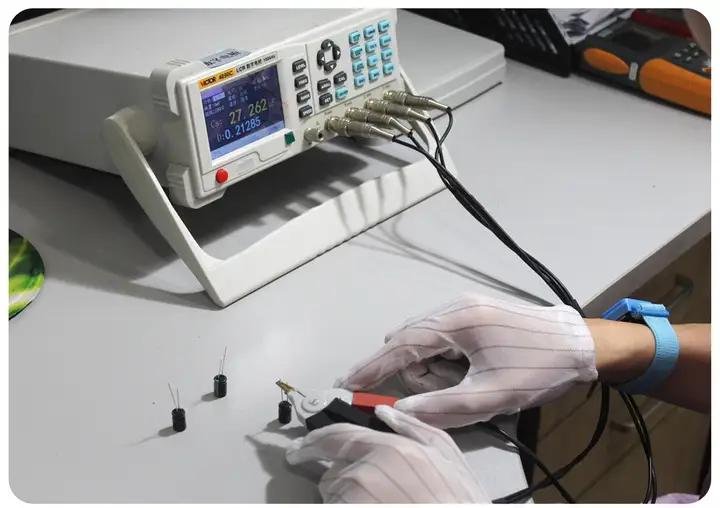
Production tests are quick, low-level measurements made on every piece. Inductance and leakage inductance measurement confirms the core, gap and winding arrangement. A transformer turns ratio test confirms turns and polarity on each winding. DC resistance confirms wire gauge and joint quality. A transformer hipot test confirms the insulation between windings and to the core. An impulse test compares the ringing response of each winding with a known good unit to find shorted turns.
Design validation happens in the customer's circuit and on the bench. The sample is run at minimum and maximum input and full load while waveforms are checked for signs of saturation, the leakage spike on the switch is measured, and winding and core temperatures are recorded once they stabilise. Power analysers measure input and output power so losses can be estimated. Only when these results are accepted is the construction frozen for production.
 ISO 9001:2015 certified
What each test measures and which fault it is meant to catch.
| Primary inductance | Measured on an LCR tester with other windings open. Detects wrong core, gap or turns. |
|---|---|
| Leakage inductance | Measured at the primary with the secondary shorted. Detects a wrong winding arrangement or poor coupling. |
| Turns ratio and polarity | Checked on an automatic transformer tester. Detects miscounted turns and reversed windings. |
| DC resistance (DCR) | Measured in mΩ or Ω per winding. Detects wrong wire gauge, broken strands and poor terminations. |
| Q factor | Ratio of reactance to loss at the test frequency. A low reading can indicate shorted turns or core damage. |
| Saturation current | Current at which inductance falls by a stated percentage. Confirms the gap and core material. |
| Hipot (dielectric strength) | Test voltage applied between windings and to the core for a set time. Detects insulation defects. |
| Impulse (surge) test | Compares the damped ringing waveform with a reference unit. Detects interturn shorts. |
| Power and loss | Measured on a power analyser under load during validation. Confirms efficiency and heating. |
Test frequency, limits and hipot voltage are specified per design and agreed on the approved sample. A test certificate is supplied with orders on request.
Typical stages at which transformers are measured.
A new design is measured against its specification and then run in the customer's converter. Values reported on the sample become the reference limits for later batches.
Enquire now
Every unit in a batch is checked for inductance, resistance and hipot before packing.
Enquire nowOEM and EMS buyers often recheck a sample quantity on receipt. Agreeing the test frequency and voltage level in advance makes their readings comparable with ours.
Enquire now
When a transformer is re-sourced or its core changed, repeating the validation run shows whether leakage, losses and temperature rise still match the original part.
Enquire nowStock parts you can order today. View details, add to cart or enquire for a custom variant.
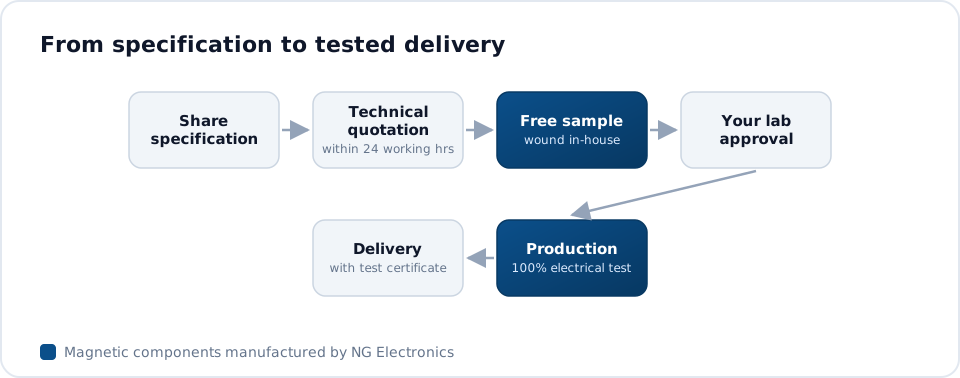
Email your specification and test requirements to sales@ngelectronics.in, or call or WhatsApp +91 83290 52861, Monday to Saturday, 9am to 7pm. We reply with a technical quotation within 24 working hours.
Measurement conditions matter as much as the numbers. Inductance read on an LCR tester depends on test frequency and signal level, because ferrite permeability changes with flux density, so a drawing should state both. Leakage inductance readings include the inductance of the shorting link, which becomes significant on low-leakage parts; the short must be as brief and thick as practical.
Hipot testing needs similar care. The test voltage is set by the insulation requirement of the end product and is applied between windings that must be isolated, with the ends of each winding joined so that no voltage appears across the winding itself. Repeated high-voltage testing stresses insulation, so retests are normally limited or done at a reduced level. Saturation is checked in circuit by watching the primary current ramp: since V = L di/dt, falling inductance shows as an upturn in slope.


Test equipment at NG Electronics includes LCR testers, automatic transformer testers, impulse testers, insulation breakdown testers and power analysers for single and three phase work. Because winding and testing share one site in Pune, a reading that drifts during a batch can be taken straight back to the winding station. Batch records link every lot to its raw material and production date.
As an ISO 9001:2015 certified company founded in 2017, with a team of more than 50, we treat the approved sample as the reference for production. A free sample goes to your lab first; production follows with every unit electrically tested and a test certificate available on request. Materials are RoHS and REACH compliant, with certificate copies available on request, and the same documentation can be shared for overseas enquiries.
Call, WhatsApp or use the form with inductance, current and quantity.
Price, lead time and datasheet within 24 working hours.
Sample built in-house for your lab testing and approval.
Production with 100% electrical testing under ISO 9001:2015.
Packed with a test certificate, shipped across India or exported worldwide.
Answers about transformer testing and design validation from NG Electronics, an ISO 9001:2015 certified company
Design validation proves that the design itself works in the real converter: it checks saturation margin, voltage stress, losses and temperature rise at the worst operating points. Production testing proves each manufactured unit matches that validated design, using quick measurements such as inductance, turns ratio, resistance and hipot on every piece.
The ends of each winding are joined together, and a high test voltage is applied between the windings that must be isolated, and between windings and core, for a defined time. The voltage level and duration come from the insulation requirement of your end product. NG Electronics performs hipot testing on insulation breakdown testers.
Leakage inductance is measured at the primary terminals on an LCR tester with the secondary windings shorted. With the secondary shorted, the magnetising inductance is bypassed and the meter reads mainly the flux that fails to link both windings. The shorting link must be short and of low resistance, and the test frequency should be stated.
It applies a small AC signal to one winding and measures the voltage on the others, giving the ratio and the phase of each. This catches miscounted turns, windings connected to the wrong pins and reversed polarity. Automatic transformer testers can run this check together with inductance and resistance in one sequence.
Hipot stresses the insulation between separate windings, but it puts no voltage across the turns of a single winding. An impulse tester discharges a capacitor into the winding and records the damped oscillation. A shorted turn or weak interlayer insulation changes the waveform compared with a reference unit.
Yes. A test certificate is supplied with orders on request. All units are electrically tested, and batch records trace each lot to raw material and production date. If your incoming inspection uses particular test conditions, tell us at the quotation stage so readings on both sides are comparable.
How every unit is inspected and electrically tested.
Learn moreHow to specify a custom ferrite transformer: the design inputs a winder needs, from an ISO 9001:2015 certified
Learn more
Transformer winding configurations and insulation explained: layers, interleaving, margins and tape
Learn more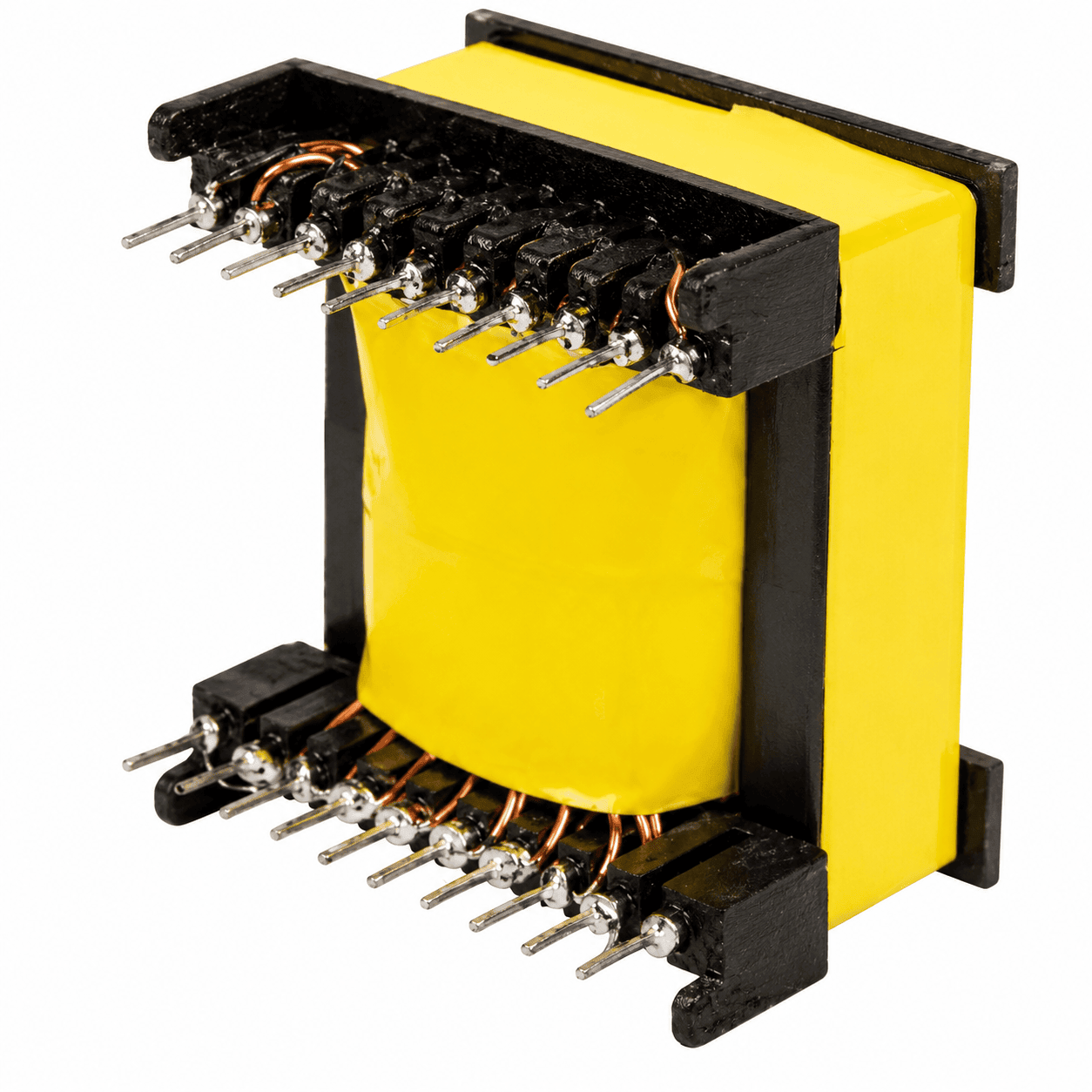
SMPS transformer manufacturer in Pune, ISO 9001:2015 certified
Learn moreSend your specification or drawing for transformer testing and design validation. NG Electronics is an ISO 9001:2015 certified company, and every enquiry is answered by our engineering and sales team in Pune.



These products are limited, checkout within

Smart configuration workspace setup.


