
PFC boost stage
The boost inductor draws near-sinusoidal current from the mains. It needs stable inductance at the peak of the line current and low core loss at the switching frequency.
Enquire now


NG Electronics · ISO 9001:2015 Certified Company
NG Electronics is an ISO 9001:2015 certified manufacturer in Pune supplying inductors for UPS systems: PFC chokes, battery converter inductors and inverter output filter inductors, each one electrically tested before dispatch.
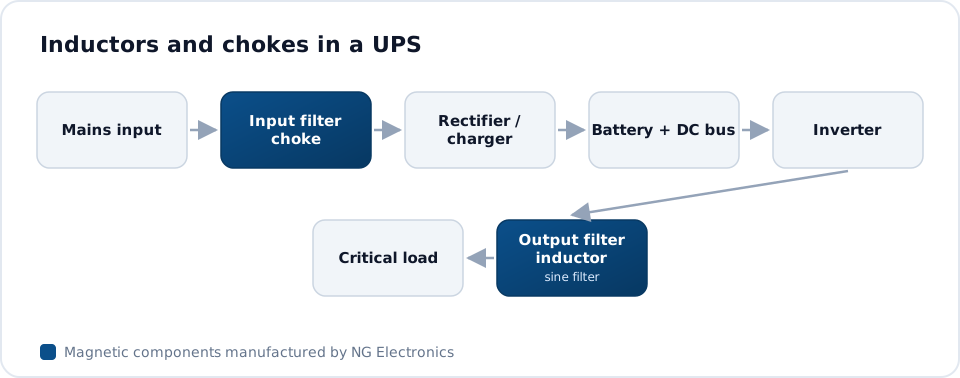
Inductors for UPS systems do more varied work than in most power equipment. An online double-conversion UPS rectifies the mains, holds a DC bus, charges and discharges a battery, and then rebuilds a clean sine wave for the load. Each of those stages has a magnetic part at its centre, and each part sees a different mix of DC bias, ripple frequency and fault current.
At the input, a boost inductor shapes the mains current for power factor correction and carries line-frequency current with high-frequency ripple on top. On the battery side, a converter inductor carries almost pure DC with a small triangular ripple. At the output, the UPS inverter output inductor works with a capacitor to remove the switching carrier and leave the 50 Hz fundamental.
The condition that matters most is rarely normal running. A UPS must ride through transfer to battery, overload and the inrush of connected loads such as transformer-fed equipment and rectifier front ends. During those events the inductor current can rise well above its rated value, and if the core saturates the inductance collapses just when the inverter needs it to limit current. For that reason UPS inductors are specified by saturation current at overload, not only by RMS heating current.
ISO 9001:2015 certifiedAs a UPS power inductor supplier we build to the converter's own figures. The ranges below are what we manufacture; values that depend on your topology are agreed per design.
| Inductance range | Standard 10 µH to 10 mH; custom 1 µH to 50 mH |
|---|---|
| Current rating | Up to 25 A standard; higher currents with heavier gauge or multi-strand copper |
| Core materials | Iron powder and ferrite toroids; MPP, Sendust, High Flux and nanocrystalline on custom designs |
| Saturation current | Specified per design at your overload condition; measured on every unit |
| DC resistance | Specified per design; measured on every unit |
| Mounting formats | Through-hole, chassis and flying-lead |
| EMI parts | Common mode chokes 1 mH to 100 mH, up to 50 A, including three-phase ring-core types |
| Testing | 100% electrical test: inductance, DCR, Q factor, saturation current and hipot |
| Compliance | RoHS and REACH compliant materials; certificate copies available on request |
Custom UPS inductor samples are typically ready in 7 to 10 working days.
A UPS choke manufacturer is normally asked for several different parts for one machine.
The boost inductor draws near-sinusoidal current from the mains. It needs stable inductance at the peak of the line current and low core loss at the switching frequency.
Enquire now
A bidirectional or separate DC-DC stage charges the battery and lifts its voltage to the DC bus on discharge. The inductor carries high DC with modest ripple, so powder cores are a common choice.
Enquire now
The output inductor and capacitor form a low-pass filter that removes the PWM carrier. Its inductance must hold up under high crest-factor loads so the output waveform stays clean.
Enquire now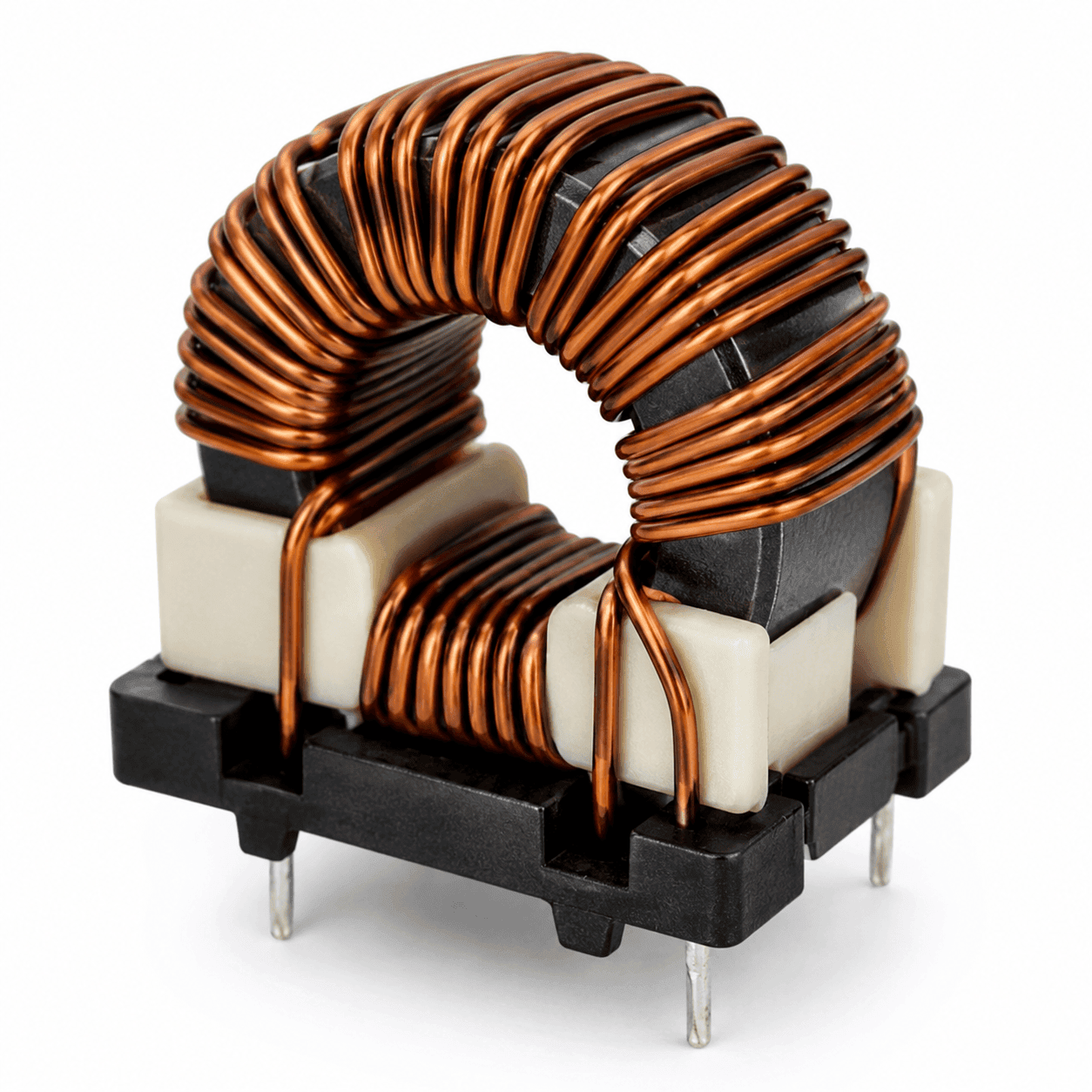
Common mode chokes and differential line chokes limit conducted noise on both the mains and load sides. Ring-core parts cover single-phase and three-phase power lines.
Enquire nowStock parts you can order today. View details, add to cart or enquire for a custom variant.

Send the stage, inductance, rated and peak current, switching frequency and space available to sales@ngelectronics.in, or call or WhatsApp +91 83290 52861, Monday to Saturday, 9am to 7pm.
The output filter is a compromise between ripple and response. A larger inductance lowers ripple current in the inverter switches and makes the carrier easier to filter, but it also drops more voltage at 50 Hz, slows the response to load steps and adds copper. Designers commonly settle on a ripple current that is a moderate fraction of rated current, then choose the capacitor so the filter corner sits well above the fundamental and well below the switching frequency.
Core material decides how the part behaves on overload. Powder cores such as iron powder, Sendust and High Flux have a distributed air gap, so their inductance falls gradually as current rises; this soft saturation gives the inverter control some warning instead of a cliff. Gapped ferrite has lower core loss at high frequency but saturates abruptly, and earlier when hot.


A UPS is bought for reliability, so its magnetics have to be repeatable from lot to lot. NG Electronics is an ISO 9001:2015 certified company with a team of more than 50 in Pune, and every inductor is wound and tested under our own roof instead of being bought in. Each unit is checked for inductance, DCR, Q factor, saturation current and hipot, and batch records trace a part back to its raw material and production date if a field question ever arises.
Working with us follows a fixed path. You send the specification, and a technical quotation comes back within 24 working hours. A free sample is then built for approval in your lab; once it passes, production runs with full electrical testing and a test certificate can accompany the delivery on request. We ship across India from Pune, and enquiries from overseas UPS manufacturers are welcome.
Call, WhatsApp or use the form with inductance, current and quantity.
Price, lead time and datasheet within 24 working hours.
Sample built in-house for your lab testing and approval.
Production with 100% electrical testing under ISO 9001:2015.
Packed with a test certificate, shipped across India or exported worldwide.
Answers about inductors for UPS systems from NG Electronics, an ISO 9001:2015 certified company
We supply the wound magnetic parts used across a UPS: PFC boost inductors, battery charger and booster inductors, inverter output filter inductors, differential line chokes and common mode chokes. Standard toroidal inductors cover 10 µH to 10 mH at up to 25 A, and custom parts extend from 1 µH to 50 mH.
The inverter produces a pulse-width modulated voltage, not a sine wave. The output inductor, together with a filter capacitor, forms a low-pass filter that attenuates the switching carrier and its harmonics while passing the 50 Hz fundamental. It also limits the rate at which current can rise during a load fault, which gives the control and protection circuits time to act.
When a core saturates, its inductance falls sharply and the current ripple rises, sometimes enough to trip or damage the inverter switches. A UPS regularly sees currents above rated value during overload, transfer and load inrush. The choke should therefore keep a useful share of its inductance at the highest peak current expected, and we measure saturation current on every unit to confirm it.
Ripple and switching frequency decide it. Powder cores such as Sendust and High Flux handle large DC bias with gradual saturation and are widely used for PFC and output filters. Iron powder costs less but has higher core loss. Gapped ferrite gives the lowest loss at high switching frequency but saturates abruptly. We suggest a material after seeing your current waveform and frequency.
Yes, within our ranges. Ring-core common mode chokes are available up to 50 A, including three-phase power line filtering versions, and line filter inductors run from 500 mA to about 50 A, with line reactors for three-phase panels. Power inductors above the 25 A standard range are built as custom parts with heavier gauge or multi-strand copper to suit your current.
Stock toroidal inductors typically dispatch within 24 hours. For a custom UPS inductor, samples typically take 7 to 10 working days after the specification is agreed, and a first sample for lab approval is free. Around 10 pieces is a common prototype quantity, while production orders for custom parts typically begin between 100 and 1,000 pieces.
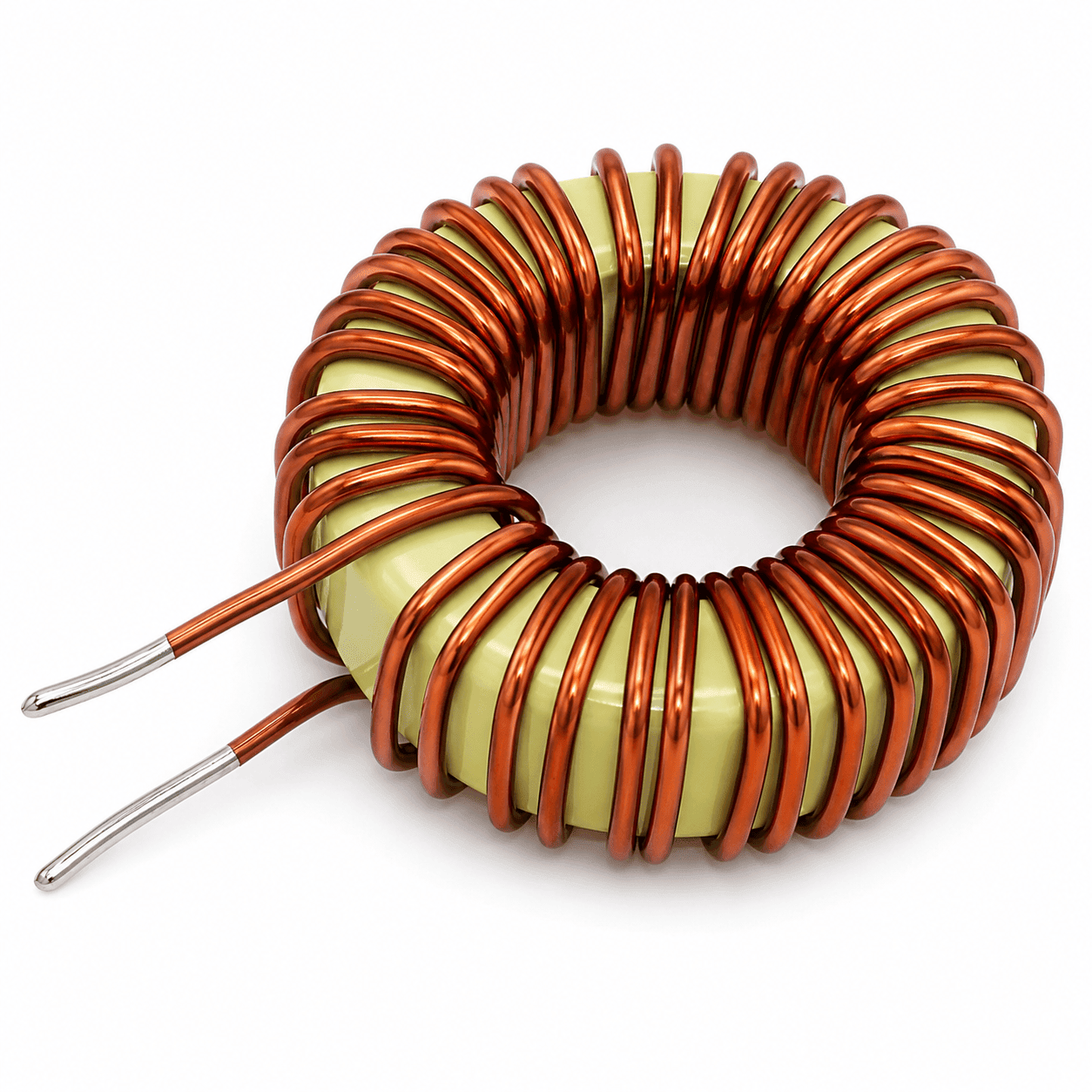
Standard range 10 µH to 10 mH, up to 25 A.
Learn moreHigh current toroidal inductor manufacturer in Pune, ISO 9001:2015 certified
Learn more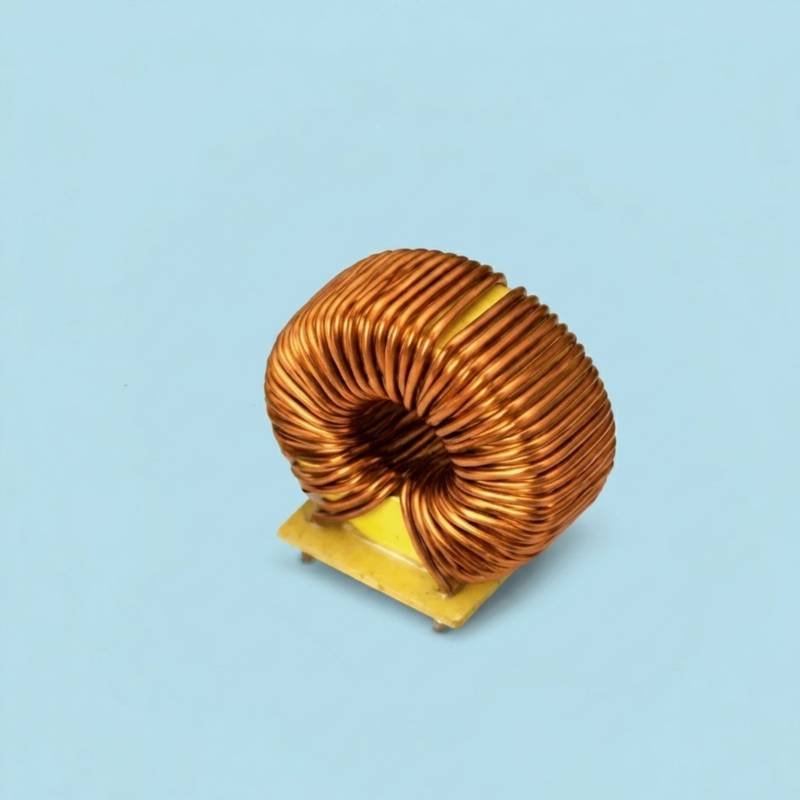
Battery charger inductor supplier in Pune, ISO 9001:2015 certified
Learn more
High current common mode choke up to 50 A from an ISO 9001:2015 certified maker in Pune
Learn moreSend your specification or drawing for inductors for UPS systems. NG Electronics is an ISO 9001:2015 certified company, and every enquiry is answered by our engineering and sales team in Pune.



These products are limited, checkout within

Smart configuration workspace setup.


