
PFC and boost chokes
High DC current with ripple on top. Sendust or High Flux toroids are typical, since they hold inductance at peak current with acceptable loss.
Enquire now


NG Electronics · ISO 9001:2015 Certified Company
Ferrite vs powdered iron cores is the first material decision in most inductor designs. NG Electronics, an ISO 9001:2015 certified manufacturer in Pune, winds on both and explains how to choose.
Comparing ferrite vs powdered iron cores means comparing two different ways of building a magnetic material. Ferrite is a ceramic made from iron oxide combined with manganese-zinc or nickel-zinc. Its electrical resistivity is high, so eddy current loss stays low at switching frequencies, and its permeability is high. Its weakness is saturation: ferrite typically reaches its limit at a flux density of roughly 0.3 to 0.5 T, and that limit falls as the core gets hotter.
A powder core is made of fine metal particles, each insulated from its neighbours and pressed into shape. The insulation between particles behaves as an air gap spread throughout the core, which is called a distributed gap. Iron powder typically saturates at around 1 T or more, and it does so gradually, so inductance sags under heavy current instead of collapsing. Core loss, however, is higher than ferrite at the same frequency and flux swing.
The iron powder core vs ferrite decision therefore depends on what the inductor carries. A part handling large DC current with modest ripple, such as an output or filter choke, suits powder. A part with a large AC flux swing at high frequency suits ferrite, with a discrete gap in the core if it must store energy. NG Electronics uses both materials for toroidal power inductors and proposes a core against your operating conditions.
 ISO 9001:2015 certified
A summary of the materials most often considered for power inductors and chokes. Behaviour described is typical; exact figures depend on grade and supplier.
| Ferrite (MnZn) | Low loss at switching frequencies, high permeability. Needs a discrete gap to store energy; saturates sharply. |
|---|---|
| Iron powder | Distributed gap, high saturation, low cost. Higher core loss; suited to DC chokes with modest ripple. |
| Sendust | Alloy powder with lower loss than iron powder and gradual saturation. A common mid-cost choice. |
| MPP | Lowest core loss among the powder materials, with stable inductance. Typically the most expensive. |
| High Flux | Highest saturation of the alloy powders. Chosen where DC bias is very high. |
| Nanocrystalline | Very high permeability. Used mainly in common mode chokes, not energy storage inductors. |
| Saturation behaviour | Ferrite: abrupt. Powder cores: gradual, so inductance should be specified at operating current. |
| NG Electronics toroidal range | 10 µH to 10 mH standard, up to 25 A; custom 1 µH to 50 mH |
Core material is confirmed on the technical quotation after your DC current, ripple and switching frequency have been reviewed.
Four common inductor roles, with the material usually chosen for each and the reason behind it.
High DC current with ripple on top. Sendust or High Flux toroids are typical, since they hold inductance at peak current with acceptable loss.
Enquire now
These chokes run for long hours at high current. Alloy powder cores keep loss and temperature rise lower than plain iron powder would.
Enquire now
Compact regulators switching at several hundred kHz use gapped ferrite, where its low core loss outweighs its sharper saturation.
Enquire now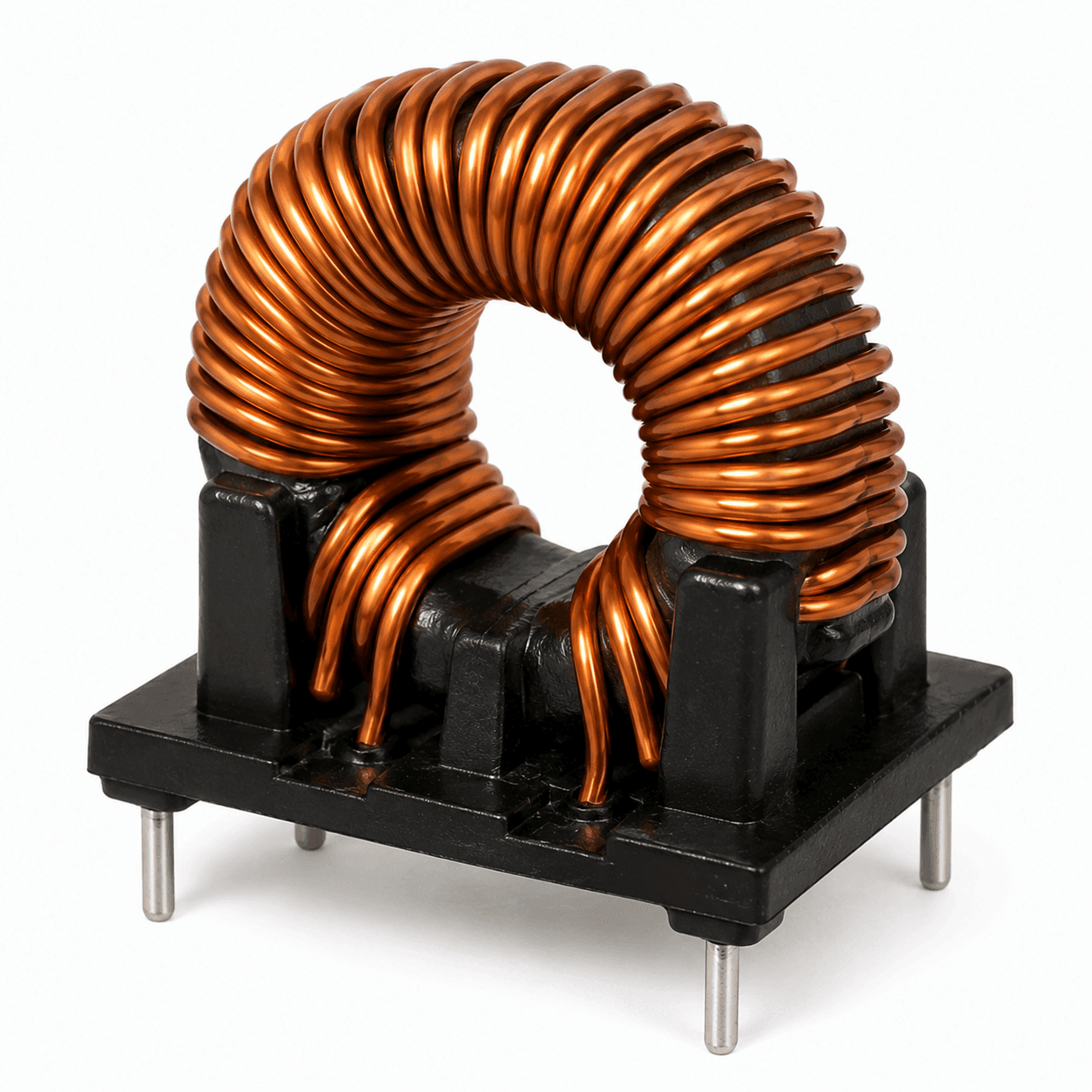
Differential-mode line chokes commonly use iron powder, while common mode chokes use high-permeability MnZn ferrite or nanocrystalline cores.
Enquire nowStock parts you can order today. View details, add to cart or enquire for a custom variant.

Email your DC current, ripple, switching frequency and size limits to sales@ngelectronics.in, or call or WhatsApp +91 83290 52861, Monday to Saturday, 9am to 7pm.
Between plain iron powder and ferrite sit three alloy powders. Sendust is an iron-silicon-aluminium alloy with clearly lower loss than iron powder at a moderate price. MPP, a nickel-iron-molybdenum alloy, has the lowest loss of the group and very stable inductance, at the highest cost. High Flux, a nickel-iron alloy, saturates at the highest flux density, typically around 1.5 T, and is used where DC bias dominates. All three share the distributed gap and soft saturation of powder cores.
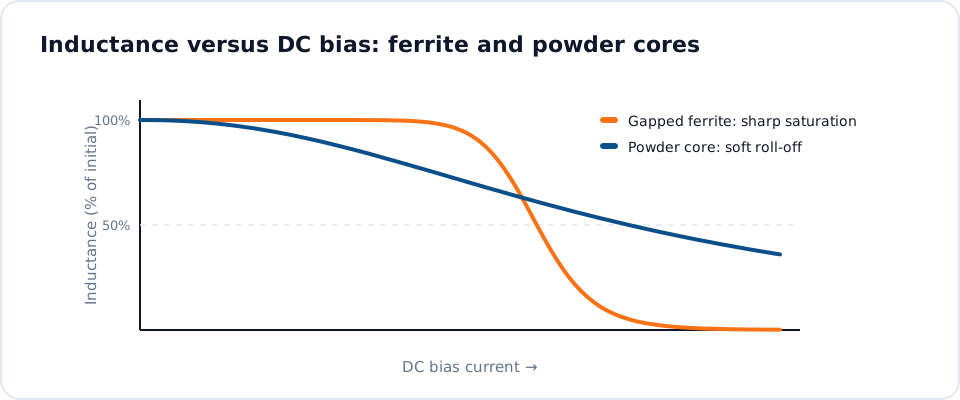
Because a powder core loses inductance progressively, its value must be specified at the working current and not only at zero bias. The diagram shows the general shape: inductance stays near its initial value, then rolls off as DC current pushes the core towards saturation. A gapped ferrite holds flat for longer and then drops steeply.


Material data only becomes useful when someone turns it into a finished component. NG Electronics is an ISO 9001:2015 certified company that winds custom inductors on ferrite, iron powder, MPP, Sendust, High Flux, nanocrystalline and air cores, in through-hole, SMD, chassis and flying-lead formats. Because the full list is available, the proposal for your part can follow the electrical requirement instead of being limited to a single material family.
Each finished inductor is tested for inductance, DCR, Q factor, saturation current and hipot, so a change of core material shows up in measured figures, not assumptions. Materials are RoHS and REACH compliant, with certificate copies available on request. Send your current, ripple, frequency and size limits, and our engineers will return a technical quotation within 24 working hours, followed by a free sample for approval in your lab.
Call, WhatsApp or use the form with inductance, current and quantity.
Price, lead time and datasheet within 24 working hours.
Sample built in-house for your lab testing and approval.
Production with 100% electrical testing under ISO 9001:2015.
Packed with a test certificate, shipped across India or exported worldwide.
Answers about ferrite vs powdered iron cores from NG Electronics, an ISO 9001:2015 certified company
Ferrite is a ceramic with high resistivity and very low core loss at switching frequencies, but it saturates at a relatively low flux density and does so abruptly. Powdered iron is made of insulated metal particles that form a distributed gap, giving higher saturation and a gradual loss of inductance, at the cost of higher core loss. Ferrite suits high AC flux; powder suits high DC bias.
Choose iron powder when the inductor carries mostly DC with a small ripple, when cost matters, and when the switching frequency is moderate. If ripple is a large fraction of the DC current or the frequency is high, core loss in iron powder can become excessive and ferrite or an alloy powder is the better option.
Ungapped ferrite has such high permeability that a small DC current drives it into saturation. A gap in the magnetic path lowers the effective permeability, so the core tolerates far more current, and most of the energy is then stored in the gap.
Iron powder cores made with organic binders can lose performance gradually if they run at high temperature for long periods, an effect known as thermal ageing, so core temperature should be kept within the material supplier's limits. Alloy powders such as Sendust and MPP are typically not affected in the same way.
All three are alloy powder cores with a distributed gap. MPP has the lowest core loss and the most stable inductance, and typically the highest price. High Flux tolerates the most DC bias before inductance falls. Sendust sits between them on performance at a lower cost, which makes it a frequent choice for PFC and inverter chokes.
Standard toroidal power inductors are built on iron powder and ferrite toroidal cores, from 10 µH to 10 mH at up to 25 A. Custom wound inductors extend this to MPP, Sendust, High Flux, nanocrystalline and air cores. Prototype quantities start at about 10 pieces, and custom samples are typically ready within 7 to 10 working days.
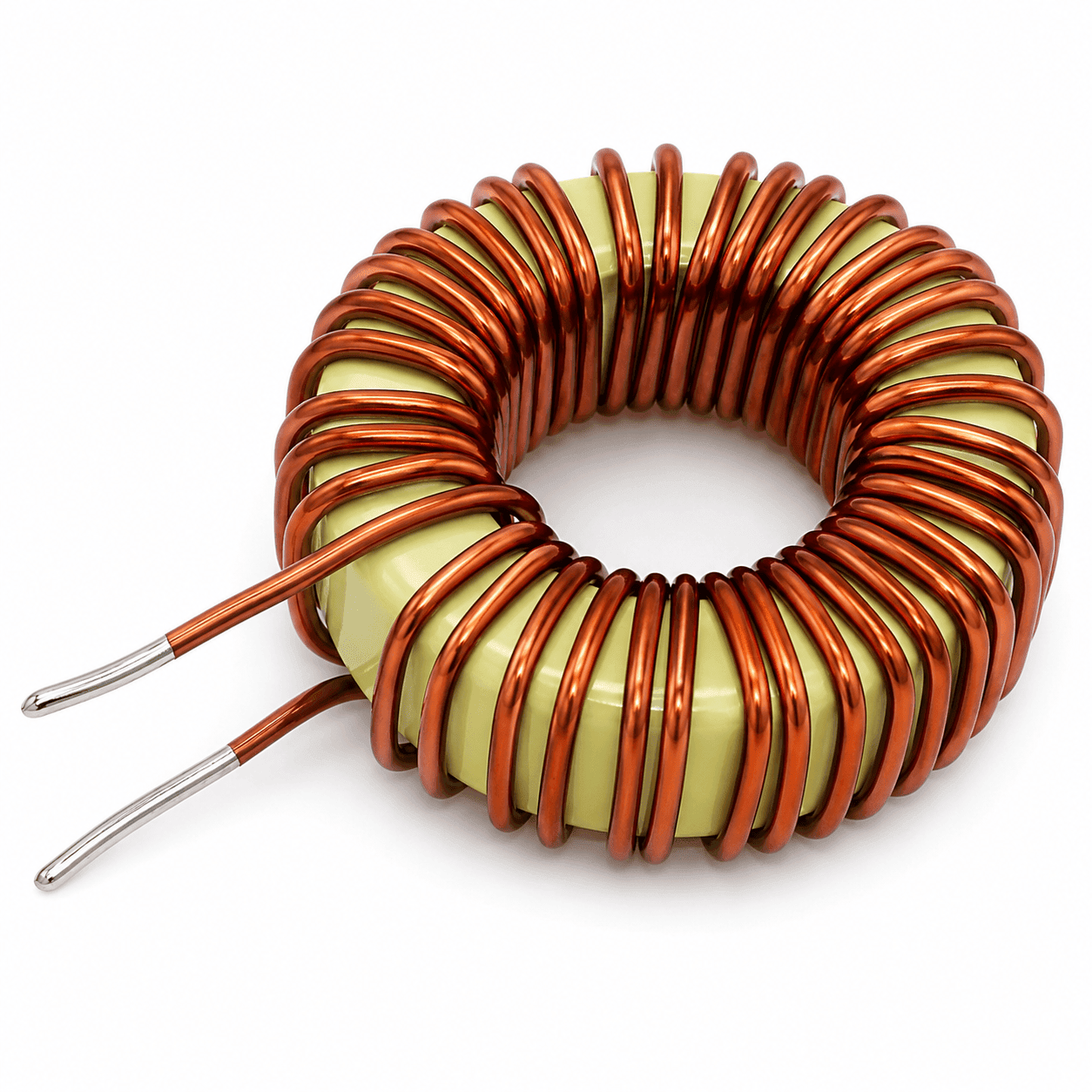
Standard range 10 µH to 10 mH, up to 25 A.
Learn more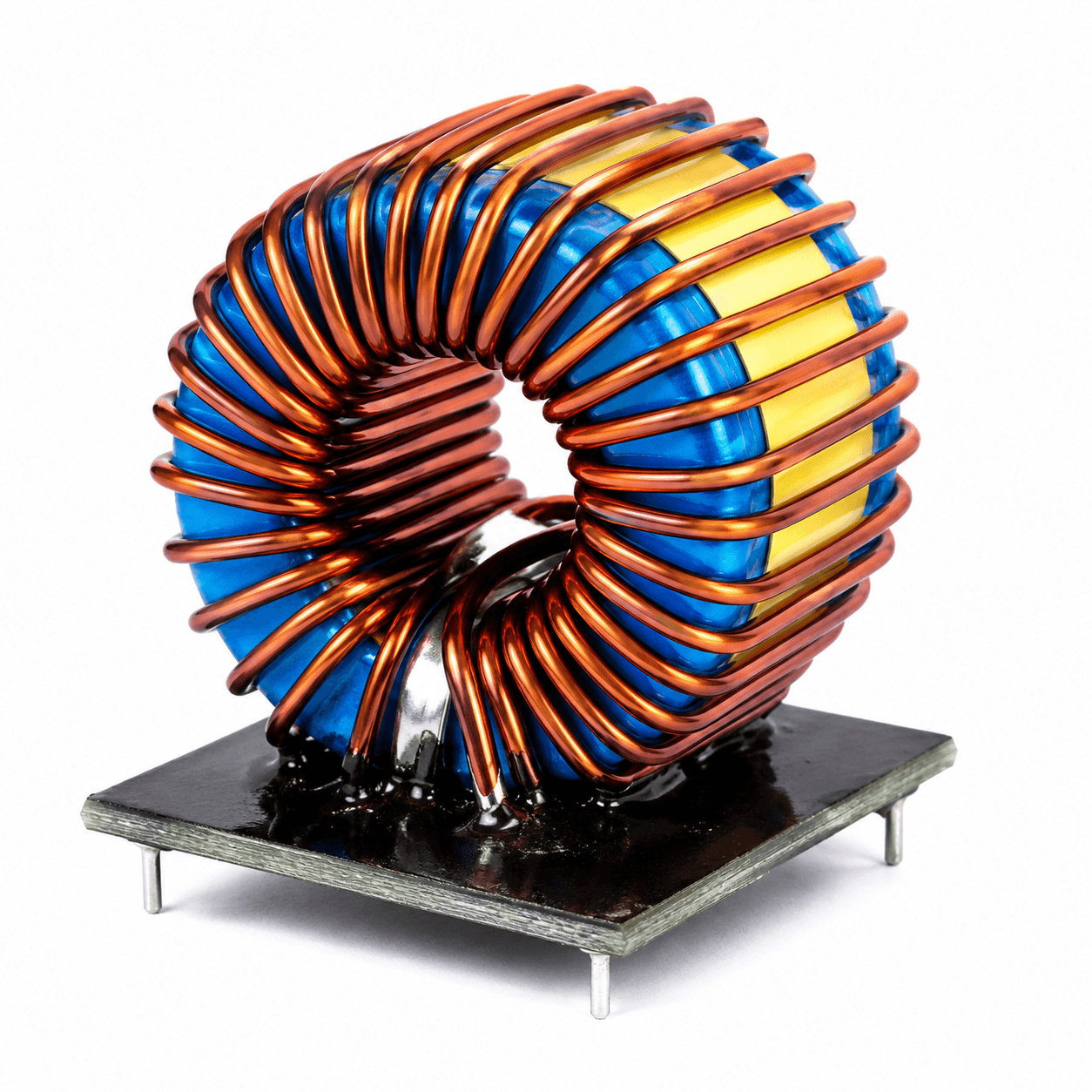
Built to your inductance, current and footprint.
Learn moreInductance, saturation current and DCR explained in plain terms, with selection advice from an ISO 9001:2015 c
Learn moreHigh current toroidal inductor manufacturer in Pune, ISO 9001:2015 certified
Learn moreSend your specification or drawing for ferrite vs powdered iron cores. NG Electronics is an ISO 9001:2015 certified company, and every enquiry is answered by our engineering and sales team in Pune.



These products are limited, checkout within

Smart configuration workspace setup.


